How to organize an attractive careers forum for university students
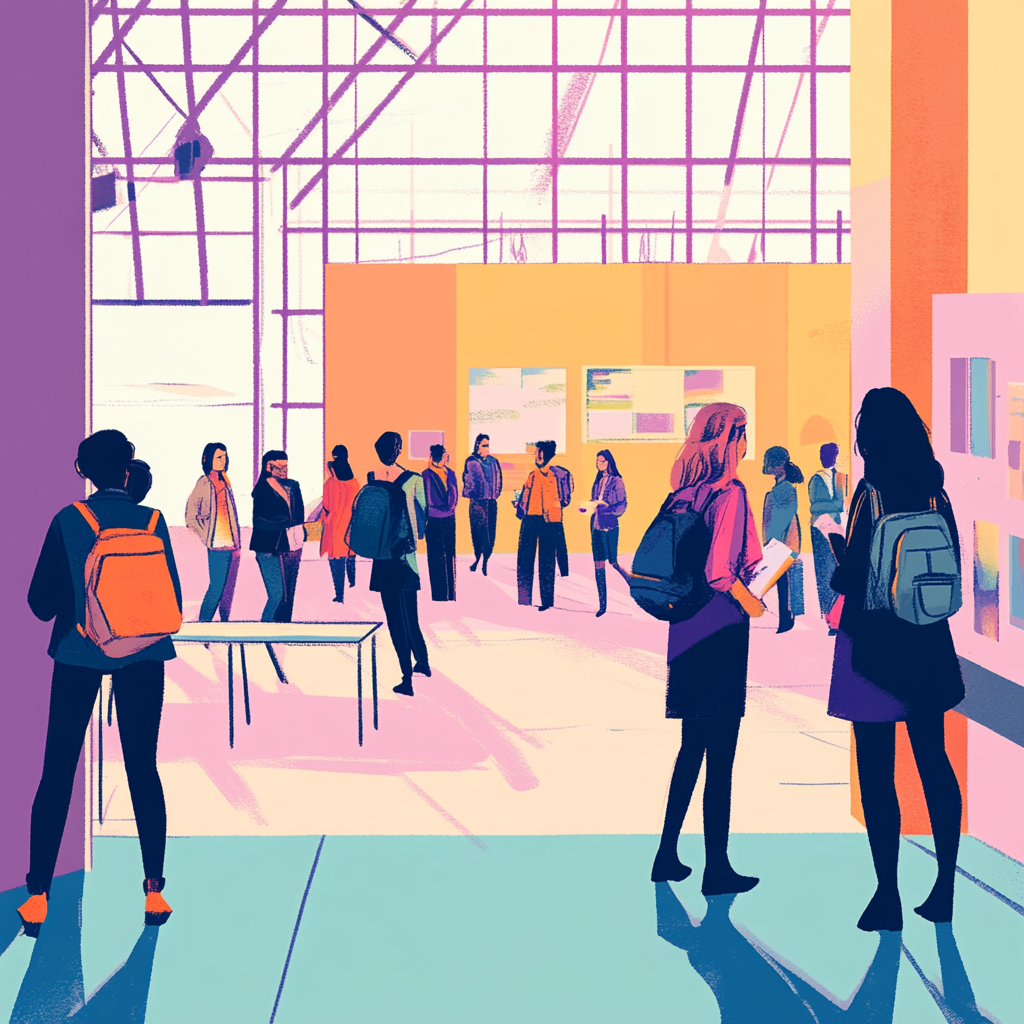
Organizing an engaging career fair for university students is a stimulating challenge that requires careful preparation and meticulous execution. This event offers students a unique opportunity to explore different industries, meet passionate professionals, and gain valuable insights into career prospects. To ensure the fair's success, strategic planning, effective communication, well-thought-out logistics, and an attractive program are essential. By following these key steps and actively involving students in the process, you will create a memorable event that inspires and guides them in their career choices.
Summary :
-
Strategic planning for the forum
-
Communication and promotion of the event
-
Logistics organization and space planning
-
Programming of attractive activities
Strategic planning for the forum
Defining objectives and target audience
Clearly defining objectives and target audience is a fundamental step in organizing a successful career fair. Without a precise vision of what you want to achieve and the profile of the students you are targeting, it is difficult to implement a coherent and effective strategy.
Well-defined objectives guide all decisions, from the selection of speakers and proposed activities to the communication surrounding the event. They provide clear direction for the organizing team and ensure that all efforts converge towards a common goal.
Similarly, a thorough understanding of the target audience, their expectations, interests, and guidance needs is essential. This allows the forum's content and format to be tailored to be as relevant and engaging as possible for the students involved.
By neglecting this crucial step, one risks organizing an event that lacks focus and struggles to find its audience. A forum built on solid foundations, with clear objectives and a well-defined target audience, on the other hand, has every chance of generating engagement and fully fulfilling its mission of providing information and guidance.
Strategic date and location selection
To choose the ideal date for your campus career fair, target a strategic period in the academic calendar. The beginning of the fall semester, when students are back on campus and open to opportunities, can be a good time.
As for the venue, choose a central and easily accessible location on campus. The main hall, the plaza, or a large auditorium are all suitable options. Ensure the space is large enough to accommodate the booths and planned activities while still allowing for easy flow of visitors.
Also consider practical aspects such as proximity to public transport, parking availability, and accessibility for people with reduced mobility. A strategic and well-equipped venue will greatly contribute to the success of your event.
Building an effective organizing team
To ensure the success of your career fair, it is essential to build a strong and well-structured organizing team. Here are the main roles to be filled and the distribution of tasks:
-
Logistics Manager: This person will be in charge of venue management, space layout, signage, and coordination with technical service providers. They will ensure the smooth installation and dismantling of the stands.
-
Corporate Relations Manager: Their role will involve contacting companies, managing exhibitor registrations, and ensuring partnership follow-up. They will be the primary point of contact for professionals participating in the event.
-
Communications Manager: This person will develop the communications strategy, design promotional materials (posters, flyers, website) and ensure the dissemination of information to students and the media. Their objective will be to give the event maximum visibility.
-
Volunteer Coordinator: Their role will be to recruit and train the team of volunteers who will be on hand on the day to welcome visitors, guide participants, and assist exhibitors. Effective human resource management will be essential.
-
Programming Manager: This person will develop the schedule of conferences, workshops, and activities. They will contact speakers, define the topics to be covered, and ensure the smooth running of activities during the forum.
By working hand in hand and efficiently dividing tasks, your organizing team will maximize its chances of making this careers forum a memorable success, beneficial to both students and participating companies.
Communication and promotion of the event
Creating an attractive visual identity
A well-designed style guide is the foundation of a strong and memorable visual identity. It allows you to define key visual elements such as colors, fonts, and graphic styles that will be used consistently across all communication materials.
By ensuring that all these elements harmonize and effectively convey the values and personality of the event, you will create a distinctive identity that will capture the attention of your target audience. Visitors will more easily recognize and engage with your forum, thus strengthening its appeal and impact.
Use of university communication channels
University communication channels are a powerful tool for promoting a career fair. Student newsletters, for example, reach a large audience already interested in career opportunities. Announcing the fair in these newsletters, with a link to the dedicated website, will generate targeted traffic.
Student associations' social media accounts, often with large followings, also allow for the viral spread of information. Sponsored posts with attractive visuals and a short, engaging text will generate student engagement, and they will readily share the event within their networks.
Finally, let's not overlook the power of posters in campus life. Original posters strategically placed in cafeterias, libraries, or lecture halls will make a lasting impression. A QR code linking to the forum registration page will facilitate participation.
A 360° communication strategy that utilizes all university channels in a complementary way will multiply the visibility of the event and maximize student participation, thus guaranteeing the success of this major event for their career guidance.
Digital communication strategy
To effectively promote the career fair to students, the use of digital tools is essential. Social networks like Facebook, Instagram, and LinkedIn allow you to reach a large student audience wherever they are, by sharing information about the event, testimonials from professionals, and interactive content to generate interest.
However, the importance of more traditional communication methods should not be overlooked. Sending targeted newsletters, posting notices on campuses, or distributing flyers can increase the forum's visibility and reach students who are less active on social media.
The ideal approach is therefore to adopt a multi-channel strategy, skillfully combining digital tools and traditional media. A dedicated website will serve as the central hub for all forum information. Promoting it through sponsored posts on social media and banners on university websites will generate traffic. Simultaneously, a targeted email campaign and posters in strategic student locations will ensure maximum reach. This synergy between digital and traditional methods will amplify the impact of the communication, attracting the maximum number of students on the day of the event.
Logistics organization and space planning
Optimal layout of stands and spaces
The layout of the booths is a key element in creating an atmosphere conducive to networking at a career fair. A poorly organized space can quickly hinder visitor flow and negatively impact the quality of interactions.
For an effective layout, ensure that the aisles are wide enough to facilitate movement. Alternate exhibition areas and rest areas judiciously. These latter areas, enhanced with food outlets, will encourage informal gatherings.
As for the booths, opt for a layout organized into themed clusters by sector of activity. This intuitive arrangement will allow visitors to quickly identify the companies that interest them. Within each cluster, a harmonious mix of large corporations and SMEs will offer a diverse range of opportunities for interaction.
Finally, pay attention to the overall aesthetics by ensuring uniformity of the stands and clear signage. A visually appealing space will inspire confidence in visitors and encourage them to engage with professionals. A successful forum absolutely requires an attractive venue!
Equipment and resources needed
To ensure the smooth running of your careers fair, plan for:
-
A spacious and accessible location, ideally on campus, such as a hall or amphitheater
-
Modular booths to accommodate businesses, with tables, chairs, and electrical outlets
-
Clear signage to guide visitors: posters, arrows, forum map
-
Audiovisual equipment for conferences: microphones, speakers, video projector, screen
-
High-performance Wi-Fi access available to exhibitors and visitors
-
A refreshment area with drinks and snacks for friendly breaks
-
Badges to identify organizers, exhibitors, and differentiate visitors
-
Communication materials: flyers, programs, promotional items in the event's colors
On the human resources side, build a cohesive team with:
-
Motivated students for logistics, welcoming and facilitating the forum
-
Professors and training managers involved in the organization
-
Technical and security personnel for assembly/disassembly and flow management
With these essential elements, you will maximize your chances of creating an attractive and memorable forum, facilitating encounters between students and the professional world.
Flow and signage management
Effective visitor flow management is crucial to avoid congestion and disorientation at a career fair. Congestion can quickly develop around popular booths or narrow passageways, hindering smooth traffic flow.
Clear and strategically placed signage can greatly improve wayfinding and guidance for participants. Opt for directional signs visible from a distance, indicating the different themed areas, key points of interest, and amenities. A forum map, distributed at the entrance or displayed at key locations, will help visitors visualize the overall layout and easily locate the booths they wish to visit.
Consider using floor markings, such as colored lines or stickers, to create intuitive pathways and direct traffic flow. A well-designed layout of aisles, sufficiently wide and clear, will facilitate movement and prevent bottlenecks.
Finally, ensure that reception staff are stationed at entrances and strategic intersections. These trained hosts and hostesses, equipped with maps, will be able to actively guide visitors, answer their questions, and ensure smooth traffic flow. With these measures in place, your forum will offer a pleasant and efficient experience for all participants.
Programming of attractive activities
Conferences and thematic roundtables
To enrich your careers forum, consider organizing conferences and roundtables on specific themes:
-
Career conferences: Invite inspiring professionals to share their career paths, the challenges and opportunities in their sector. These testimonials will allow students to better understand the realities on the ground.
-
Industry-specific roundtables: Bring together experts from different professions within the same industry to compare perspectives. For example, discussions between a designer, an engineer, and a salesperson in the automotive sector will be highly informative.
-
Practical workshops: Offer CV coaching sessions, interview simulations, or small-group career exploration workshops. The interactivity and opportunity to put skills into practice will be greatly appreciated by visitors.
-
Networking: Create spaces and times dedicated to informal meetings between professionals and students. A networking lunch or a coffee chat will encourage spontaneous exchanges and network development.
By varying the formats, you multiply the opportunities for visitors to find answers to their questions, while also energizing your event. A rich program will spark interest and engagement from participants, for a memorable experience.
Practical workshops and trade demonstrations
A career fair limited to simple information booths can quickly become monotonous for students. They need to see, touch, and experience firsthand the realities of different professions in order to envision themselves and make informed choices.
The solution is to integrate practical workshops and industry demonstrations led by passionate professionals into the curriculum. An engineer could introduce 3D modeling on computer workstations. A lab technician could conduct live experiments. A journalist could run a mini radio studio where students could try their hand at being a reporter.
The idea is to allow participants to get hands-on, to playfully engage with the techniques, tools, and practical challenges of each profession. By experiencing immersive activities, they will absorb the information much better than through lengthy explanations. Furthermore, the interactive aspect will break the passive dynamic of traditional booths, sparking curiosity and engagement.
Organized in small groups, in the form of games or challenges, these workshops will also provide an opportunity for valuable interaction with professionals. This will help inspire future career choices and put a human face on professions that are sometimes overlooked. A must for a successful forum!
Networking sessions and speed meetings
Career fairs can sometimes lack interactivity and concrete exchanges between students and professionals. To remedy this, organize targeted networking and speed-meeting sessions.
The principle is simple: students register in advance for quick 10- to 15-minute meetings with professionals in fields that interest them. This allows them to get personalized advice, ask specific questions, and make initial contacts in the professional world. The professionals, for their part, identify promising candidates for future internships or jobs.
Consider varying the formats to energize these exchanges: roundtables by sector, individual coaching sessions, or even a large-scale speed-meeting format similar to job fairs. The goal is to create as many networking opportunities as possible and encourage concrete discussions, going beyond traditional information booths. These networking sessions will add real value to your forum!
Use of innovative technologies
Integrating immersive technologies like virtual and augmented reality can significantly enrich the experience of participants at a career fair. These tools allow students to interactively immerse themselves in different professional environments, visualize careers concretely, and virtually experience specific tasks.
However, implementing such immersive experiences requires significant investment in equipment and dedicated content development. It is also crucial to ensure that these technologies do not completely replace human interaction and personalized advice.
A balanced and complementary use of virtual and augmented reality, to support meetings with professionals, appears to be the best approach. This allows for capturing attention, sparking curiosity, and providing a memorable experience for students, while preserving the richness of dialogue and the sharing of experiences.
In conclusion, organizing an attractive career fair for university students requires strategic planning, effective communication, well-thought-out logistics, and a program rich in activities. By involving students in the process, creating partnerships with key players in career guidance and employment, and using innovative tools like virtual reality, you will offer participants a unique and inspiring experience. A successful fair opens new perspectives for students and facilitates their transition to the professional world, a key objective for platforms like Emundus that simplify applications and admissions to training programs.