How can we improve communication with international students?
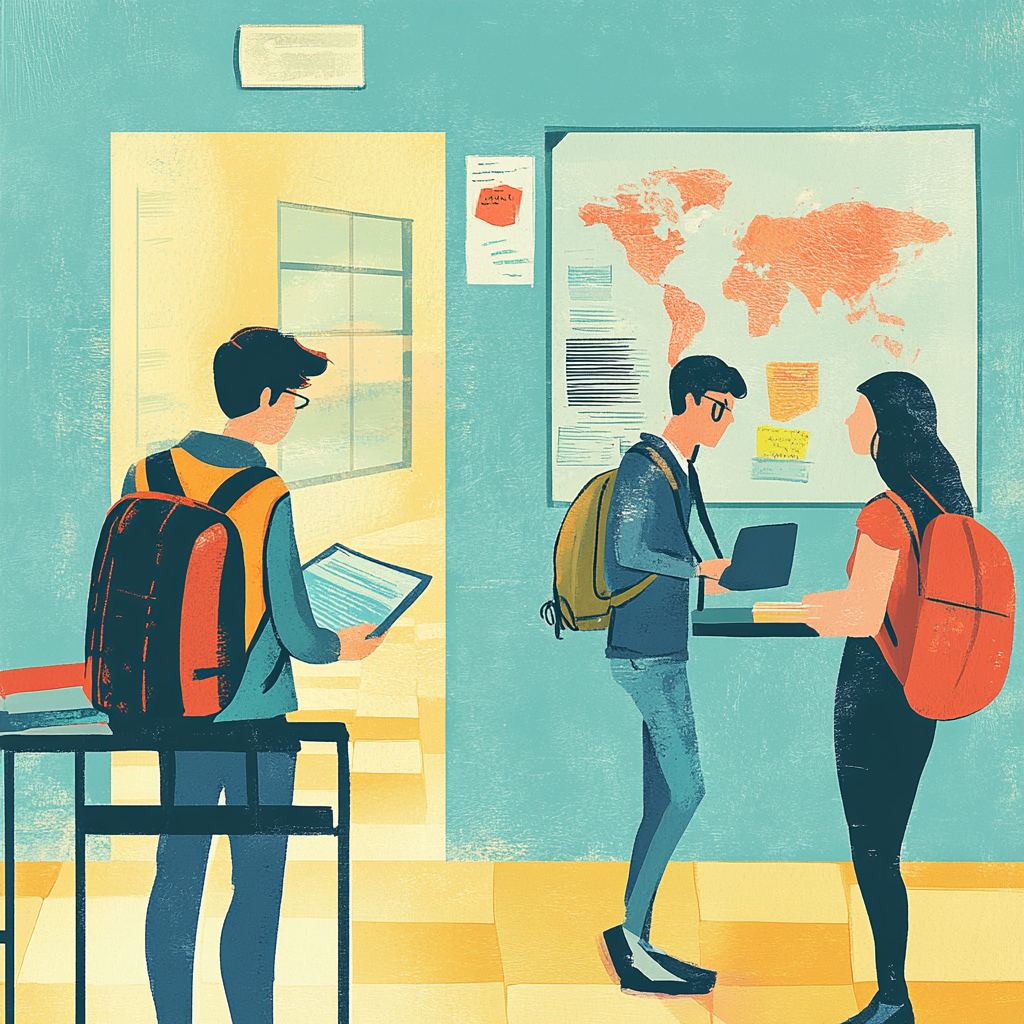
Attracting and integrating international students is a major challenge for higher education institutions in a context of increased global competition. Beyond administrative and logistical aspects, successfully welcoming these students requires tailored communication that takes into account linguistic and cultural barriers. This article proposes concrete strategies to facilitate interactions with international students, leveraging innovative digital tools and personalized support. The goal: to create an inclusive and supportive environment conducive to their academic and personal growth.
Summary :
-
Understanding the challenges faced by international students
-
Use digital tools to facilitate communication
-
Implementing personalized support
Understanding the challenges faced by international students
Linguistic and cultural barriers
Language differences present a clear barrier to communication between international and local students. Limited vocabulary or pronunciation difficulties can quickly lead to misunderstandings and hinder interaction.
Cultural norms and codes also play a key role in interactions. Differences in non-verbal communication, such as eye contact or physical distance, can be a source of discomfort and misunderstanding. Similarly, humor, references, and topics of conversation vary greatly from one culture to another.
These linguistic and cultural barriers can generate frustration, social isolation, and even conflict within the student community. Overcoming these challenges requires patience, open-mindedness, and a willingness to learn from others, both from international students and their local peers.
Adaptation to the education system
The differences between educational systems can be a real shock for international students. They often have to adapt to new teaching methods, unprecedented academic expectations, and unusual assessment methods.
These major changes can cause stress, anxiety, and feelings of inadequacy for international students. Their confidence and academic performance may suffer if they do not receive adequate support to navigate these differences.
Use digital tools to facilitate communication
Multilingual learning management platforms
Multilingual learning management systems (LMS) can greatly facilitate understanding and engagement for international students. By offering interfaces, learning resources, and communication tools in different languages, these LMS remove language barriers that can hinder the academic success of international students.
However, simply translating content is not always enough to guarantee an optimal learning experience. Cultural differences in teaching approaches and communication styles must also be considered when designing these platforms.
Thus, the most effective LMSs combine multilingual features with an intercultural approach. For example, they offer guides explaining local academic expectations, highlight examples rooted in different cultural contexts, and foster interaction among students from diverse backgrounds. This combination of linguistic adaptation and consideration of cultural specificities is key to creating an inclusive and stimulating learning environment for all international students.
Real-time translation applications
Language barriers can be a major obstacle to communication between international and local students. Fortunately, instant translation apps offer a practical solution to overcome these barriers.
These tools enable real-time translation of conversations, greatly facilitating verbal exchanges. Simply speak into your smartphone or tablet, and the translation appears or is read aloud. No more misunderstandings or communication breakdowns!
Applications like Google Translate, Microsoft Translator, and iTranslate are very popular and cover many languages. They allow students to communicate more easily, whether in class, during group work, or at social events. A valuable tool for breaking the ice and building connections despite the language barrier.
Online forums and discussion groups
International students can sometimes feel isolated and disconnected from the university community, especially upon arrival in a new environment. This feeling of isolation can hinder their academic and social integration.
Online forums and discussion groups offer an interesting solution for fostering exchanges between local and international students. These virtual spaces allow students to ask questions, share experiences, and build connections, without the initial constraints of geography or language barriers.
By encouraging participation in these platforms, universities can help international students feel like an integral part of the community. Discussion threads dedicated to welcoming new students, administrative procedures, or discovering local culture offer them numerous opportunities to obtain valuable information and integrate more easily.
Beyond the practical aspects, these online exchanges foster mutual understanding and openness to diversity. By interacting informally with their peers, international students can overcome their anxieties, improve their language skills, and familiarize themselves with the social norms of their new environment. Lasting friendships are formed, enriching everyone's experience.
Implementing personalized support
Student Mentoring Program
Integrating international students can be a real challenge. They have to adapt to a new environment, a new culture, and often a new language. This can lead to feelings of isolation and difficulties communicating effectively with their peers and professors.
Implementing a student mentoring system can be an effective solution to overcome these obstacles. In this program, each international student is paired with an experienced local student who acts as a mentor. The mentor can help the newcomer navigate the campus, understand academic expectations, and integrate socially.
A mentor can also be a valuable resource for practicing the language and understanding the cultural nuances of communication. Through regular and informal interactions, international students can gain confidence and language skills, thus facilitating their academic and social integration.
In addition to benefiting international students, this mentoring system also fosters cultural awareness and the development of intercultural skills among local students. It is therefore an effective way to promote an inclusive and interconnected university community.
Cultural orientation sessions
Arriving in a new country to study represents a major change for international students. In addition to the language barrier, they must adapt to new social norms and different cultural codes that govern daily interactions.
Organizing orientation sessions dedicated to discovering the local culture is an effective way to facilitate this transition. By giving international students the tools to understand their new environment, we help them feel comfortable and integrated more quickly.
These workshops can cover a variety of topics, from the country's history and traditions to non-verbal communication habits and practical advice for everyday life. The goal is to create a supportive space where questions and uncertainties can be freely expressed, gradually demystifying what may initially seem confusing.
By investing in these cultural orientation sessions, institutions facilitate a faster and smoother adaptation for their international students. This is an essential step towards a successful academic and personal experience, the key to genuine integration into the local student community.
Ultimately, attracting and integrating international students is a strategic challenge for higher education institutions. This requires tailored communication, leveraging innovative digital tools such as multilingual platforms and translation applications, as well as personalized support including mentoring, cultural orientation sessions, and language assistance. Solutions like those offered by Emundus can help universities meet this challenge by simplifying application and admissions management for all types of programs through task automation and personalized communication. The goal is to create an inclusive and supportive environment conducive to the success of international students.