Access main content

Uncategorized

Combating discrimination and harassment in higher education

Combating discrimination and harassment in higher education

Discrimination and harassment unfortunately remain a reality in French higher education. Racism, homophobia, ableism, sexism... institutions still struggle to effectively prevent these forms of violence, which severely impact victims' academic journeys. While support systems exist, such as helplines and disciplinary committees, they have many shortcomings and are often unknown to students. Fundamental reforms are therefore essential to better prevent discrimination, provide better support for victims, and firmly punish perpetrators of this violence.

Summary :

1- Overview of discrimination and harassment
2- Existing prevention and intervention mechanisms
3- Recommendations for strengthening the fight

Overview of discrimination and harassment

The main forms of discrimination

Discrimination can take many forms in higher education:

  • Racial discrimination manifests itself in unfavorable treatment of certain origins. For example, candidates of North African origin are 12% less likely to receive a response to their Master's application.
  • Discrimination against people with disabilities persists, despite accessibility laws. Students with disabilities represent only 2.2% of the student body.
  • Sexual and gender-based discrimination, which includes sexism, sexual violence, and LGBT-phobia, manifests itself through offensive remarks, unequal treatment, and even assaults.
  • Discrimination based on political opinions, physical appearance, religious beliefs, trade union activities, or disadvantaged social origin.

All these forms of discrimination undermine equal opportunities and hinder the academic progress of many students. They require active action through prevention, effective reporting mechanisms, and dissuasive disciplinary sanctions.

The extent of sexual and psychological harassment

According to the latest barometer from the Student Observatory of Sexual and Gender-Based Violence in Higher Education, nearly one in 20 students reports having been a victim of sexual harassment, and one in 10 reports having witnessed it. This violence persists both at festive events and in everyday life on campus.

The consequences for victims are severe. Beyond the psychological trauma, they often fear that filing a complaint will harm their studies or force them to change their field of study. Furthermore, the cost of legal proceedings is prohibitive for students with modest incomes. As a result, few dare to pursue these steps, and perpetrators act with near impunity.

The consequences for the victims

Sexist and sexual violence experienced during university studies leaves deep and lasting scars on victims. The immediate psychological impact is significant. Loss of self-confidence, feelings of shame and guilt, depression, and anxiety disorders are all common symptoms that disrupt daily life and studies.

In the longer term, these traumas have a significant impact on schooling. Difficulty concentrating, absenteeism, and declining grades are common and can lead to dropping out. Some victims are forced to change their course of study or interrupt their education. Sexual harassment thus derails promising career paths and limits equal opportunities.

The repercussions often extend into the professional sphere. Disrupted or even interrupted studies hinder job placement. Lack of confidence and post-traumatic stress can also complicate the start of a career. This long-term impact on professional prospects is a major source of harm for victims.

A genuine public health issue, the fight against violence against women and boys (VSBs) at university must be intensified, with improved support for victims. Appropriate psychological support, assistance in continuing studies, and accommodations are essential to mitigate the serious consequences of this violence on life trajectories.

Existing prevention and control measures

Listening and reporting units

Listening and reporting units play a central role in the fight against discrimination and harassment in higher education. They offer victims and witnesses a safe space to speak out and be guided towards appropriate procedures. Staffed by personnel trained in listening and support, they often constitute the first link in breaking the silence.

However, their effectiveness can be limited if they are not part of a comprehensive and proactive institutional policy. A lack of resources, unclear reporting procedures, or poor coordination with disciplinary and judicial services are all obstacles that reduce their impact. These units cannot handle all situations on their own.

Despite these limitations, listening services remain essential. Combined with other measures such as prevention, training, and proactive disciplinary procedures, they help to encourage open communication and create a safer learning environment. They play a pivotal role between victims and the institution, and contribute to the gradual shift in attitudes. Their widespread implementation in all institutions sends a strong signal of the priority given to these crucial issues.

Awareness training

Several types of training are offered to raise awareness among students and staff about issues of discrimination and harassment:

  • Mandatory modules integrated into student curricula address concepts such as consent, sexist behavior, sexual violence, and available legal recourse. Practical exercises facilitate concrete awareness-raising.
  • Occasional workshops led by specialist associations are open to all upon registration. Role-playing, personal accounts, and discussions help participants understand these phenomena and respond appropriately.
  • Sessions are offered for supervisory staff and teachers to improve their ability to identify, listen to, and guide victims. Emphasis is placed on providing a supportive environment and respecting students' accounts.
  • Information campaigns using posters, guides, and events will remind people of the law, useful contacts, and support services. The goal is to encourage open discussion and change attitudes.

Disciplinary procedures

Higher education institutions have a legal obligation to implement disciplinary procedures to address discrimination and harassment. According to the education code, a disciplinary committee must be established within each university to investigate misconduct by students and staff.

However, the current operation of these disciplinary sections has many flaws that limit their effectiveness. The procedure is not always accessible to victims, the composition of the sections can lack impartiality, and the sanctions imposed are sometimes too lenient in relation to the harm suffered.

Despite these limitations, disciplinary procedures remain an essential regulatory tool within institutions. Combined with reporting mechanisms, victim support, and prevention programs, they contribute to creating a safer and more equitable learning and working environment for all. Improving these procedures is a priority for strengthening the fight against all forms of violence and discrimination in higher education.

Recommendations to strengthen the fight

Improve reporting and support

Despite existing mechanisms, reporting gender-based and sexual violence remains a difficult process for victims in higher education. Fear of reprisals against their studies, a lack of awareness of procedures, and their limited accessibility still discourage far too many students from reporting this violence.

To overcome these obstacles, it is essential to raise awareness of support services through regular and widespread information campaigns targeting students. Training for staff must also be expanded to ensure a supportive and high-quality approach for victims, from the initial disclosure of abuse to the filing of a complaint.

The handling of reports could also be improved by clarifying the relationship between internal disciplinary procedures and criminal prosecutions. Protecting victims must be the absolute priority, by quickly taking precautionary measures to remove those involved.

Finally, ongoing psychological support for victims, even without a formal complaint, is crucial. Breaking the silence is a first step; rebuilding victims' lives over the long term must be the sustained commitment of institutions.

Strengthen prevention and awareness

To effectively combat discrimination and harassment, it is essential to focus on prevention through innovative and impactful awareness campaigns. Hard-hitting campaigns, based on powerful testimonies from victims, would lead to a genuine understanding of the seriousness of this violence.

The widespread implementation of mandatory training for all students, starting in their first year, also appears essential. Using concrete scenarios and immersive role-playing exercises, these modules would help young people better understand the mechanisms of gender-based violence and adopt appropriate responses, whether they are victims or witnesses. Involving students themselves in the design and delivery of this training would amplify its impact.

Toughen the sanctions

Current disciplinary sanctions for harassment or discrimination in higher education often lack firmness and are applied too inconsistently. This relative impunity fails to effectively deter abusive behavior and does not provide fair redress for victims.

Stricter sanctions are essential to clearly demonstrate the institution's rejection of this violence. Perpetrators of harassment, once the facts are proven, must be systematically sanctioned with temporary or permanent exclusion. For staff members, dismissal should be applied in the most serious cases. Only a firm and consistent disciplinary policy will allow for a lasting reduction of this violence.

Involve the entire community

The fight against discrimination and harassment in higher education cannot be effective without strong involvement from the entire university community. Students, teaching and administrative staff, as well as management teams, all have a key role to play in bringing about lasting changes in attitudes and practices.

A key first step is raising awareness among students from the moment they enter university. Mandatory modules on gender-based violence, consent, and available legal recourse in cases of harassment would raise awareness of problematic behaviors. By involving students themselves in the design and delivery of these training sessions, particularly through student associations, their impact would be significantly amplified.

From the staff perspective, it is crucial to train supervisors and teachers to identify problematic situations, to listen empathetically to victims, and to refer them to support services. Constant vigilance and unwavering exemplary conduct from all teams are essential to breaking the code of silence.

Finally, the strong and visible commitment of the leadership teams is a crucial signal. Through public statements, the creation of independent support units, and proactive disciplinary procedures, they send the message of zero tolerance for this violence. A proactive policy from the institution, involving the entire community, is key to ensuring that the university remains the place of empowerment and self-development it should be for everyone.

Combating discrimination and harassment in higher education requires the mobilization of the entire university community. To effectively prevent such violence, institutions must conduct extensive awareness campaigns for students upon their arrival, train their staff in identifying and listening to incidents, and adopt a proactive zero-tolerance policy. Clear reporting and disciplinary procedures must be established and communicated so that the university remains the place of empowerment and self-development it should be for all. By simplifying application and admission procedures, Emundus allows institutions to refocus on these crucial issues of inclusion and equality within their community.

  • Views: 1220

Optimize student application management with recruitment software

Optimizing Student Application Management with Recruitment Software Attracting top talent is a strategic challenge for schools looking to stand out in a competitive environment. By optimizing their recruitment process and using innovative recruitment management software solutions, they can build a strong and attractive employer brand. These tools not only improve operational efficiency but also create a seamless and engaging candidate experience. Here are best practices for strengthening your employer brand through optimized application management. Table of Contents Create a personalized and interactive candidate portal to stand out Maintain a personalized relationship with potential talent Mobilize students and alumni as ambassadors Offer original recruitment events to reveal potential 1- Create a personalized and interactive candidate portal to stand out Intuitive online application forms To attract the best students, it is essential to offer them a seamless and personalized application process. This involves implementing intuitive online application forms that adapt to the applicant's profile and program. By collecting only key information, such as diplomas, grades, and experience, the process is simplified for the applicant. These contextualized forms guide the student step by step through their application. Data entry assistance, consistency checks, and clear instructions at each stage reassure the applicant and minimize errors or omissions. The goal is to go paperless to avoid the tedious sending of paper applications. For example, consider a student applying for a Master's in Management. The online form will ask them to provide their Bachelor's degree, transcripts from all three years, and any internship or work-study experience. Drop-down menus and pre-filled fields speed up data entry. If there are any inconsistencies, an alert message appears to help them correct them. They can easily attach the required supporting documents digitally. Real-time application progress tracking: Beyond simply facilitating the application process, it's also essential to keep students informed of their application's progress in real time. Implementing automatic notifications at each key stage, such as application receipt, eligibility confirmation, or selection interviews, reassures applicants and maintains their commitment. A personalized applicant portal allows students to check their application status, upcoming deadlines, and any required additional documents or information at any time. This proactive tracking enhances the applicant's profile and strengthens the perceived quality of the institution. The applicant experience becomes a differentiating factor in a highly competitive educational landscape. For example, Sciences Po Paris has deployed and configured an admissions platform for its Summer Schools. Applicants are kept informed in real time about the completeness of their application, any missing documents, and deadlines. Email and SMS notifications remind them of upcoming steps. They can interact directly with the team through an integrated messaging system to ask questions. To streamline the application process for prospective students, here are some best practices to implement: Offer a 100% online application process, accessible on all devices (mobile, tablet, PC); Pre-fill fields with existing data to simplify data entry; Display a progress bar and save information at each stage; Integrate a chatbot to answer frequently asked questions 24/7; Provide real-time visibility on application status; Notify applicants by email and/or SMS of each step in the application process Go Paperless with predefined formats, sizes, and qualities; Allow applicants to modify or complete their application as long as the deadline has not passed. 2- Automate administrative tasks to increase efficiency: Multi-channel publication of training offers. Recruitment software centralizes the creation and distribution of training offers across a variety of channels: the institution's website, specialized job boards, social networks, etc. Pre-configured ad templates for each type of program accelerate publication and ensure consistent messaging. This automated, multi-channel distribution significantly increases program visibility and attracts a larger number of candidates who meet the prerequisites. The institution thus covers a broad spectrum of qualified student pools, both in France and internationally, and optimizes its sourcing efforts. Mines-Telecom, for example, has deployed and configured an application management platform to attract work-study students. Thanks to pre-scheduled posting campaigns on a selection of relevant job boards and social networks, the school gains visibility among target profiles. Offers are automatically removed once the deadline has passed. Automated application sorting based on predefined criteria: Faced with the influx of applications, sometimes several hundred for certain programs, manual sorting quickly becomes time-consuming and a source of errors for admissions teams. Recruitment software allows for the definition of pre-selection criteria (degree, GPA, key skills, etc.) to automatically filter profiles and identify the most relevant candidates. This automated scoring saves teams valuable time by eliminating ineligible applications as soon as they are submitted. This allows them to focus on the in-depth evaluation of qualified candidates. This objective pre-selection stage also reduces the risk of overlooking promising candidates lost in the sheer volume of applications. Consider the case of a leading business school that receives over 500 applications for its Master in Management program. Thanks to the scoring criteria defined beforehand in the Applicant Tracking System (ATS) (level of education, GPA, English test score, extracurricular activities, etc.), the software assigns a score to each application. Only candidates who meet the defined threshold are selected for further review. Here is an overview of useful features for optimizing application selection: Feature Benefit Multi-variable sorting criteria Refine scoring based on course prerequisites Weighting of criteria Prioritize the most discriminating elements Semantic matching of experiences Identify relevant skills and soft skills Integration of test results Evaluate technical or linguistic prerequisites Overview of top profiles Quick access to the most qualified applications Mobile access Pre-select candidates in real time 3- Collaborate effectively to accelerate application processing Processing an application often involves several stakeholders: academic advisors, admissions committees, administrative services, etc. Software centralizes all the data and documents in the application, accessible at any time by authorized personnel. No more lost Excel files or paper documents! Thanks to this unified and secure access, everyone can view information, complete their assessments, and share comments, all in complete confidentiality. A 360° view of the applicant's journey facilitates communication between stakeholders and accelerates collaborative decision-making. Time-consuming meetings are no longer necessary to decide on an application. Excelia, for example, has deployed and configured a platform for managing international applications. Administrative teams, program directors, and selection panels have access to a shared and secure space. They can review documents, add comments, assign scores, and communicate via a dedicated messaging system. Admission decisions are thus made more quickly and smoothly. Collaborative workflows and team notifications: In addition to centralizing data, recruitment software allows for the definition of workflows tailored to the specific requirements of undergraduate and graduate admissions. Each step, from application receipt to the final admission decision, is orchestrated to streamline collaboration between stakeholders. Notifications alert each person involved when a task is assigned, indicating the priority level and deadline. This unified application tracking system prevents oversights and bottlenecks, and empowers teams to meet processing deadlines. With a comprehensive view of ongoing admissions, managers can identify potential bottlenecks and reallocate resources as needed. Imagine a university handling hundreds of applications simultaneously. Thanks to workflows configured within the Applicant Tracking System (ATS), as soon as an application is submitted, a task is created and assigned to the admissions office for an initial eligibility review within 48 hours. Once validated, the application is automatically forwarded to the relevant academic advisors for evaluation. Each advisor receives a reminder notification if they haven't completed the task on time. The applicant is kept informed at every stage. To strengthen collaboration around admissions, an application management tool must integrate features such as: Personalized spaces for each stakeholder profile (administration, teaching staff, admissions committee, etc.); a unified view of overall progress and progress by candidate; secure data access with customizable permissions; integrated messaging for exchanging information on applications; configurable notifications to alert users to tasks requiring attention; a powerful search engine for easily finding a candidate; and visual indicators of processing times at each stage. 4- Measuring the performance of admissions processes for continuous improvement: To effectively manage its admissions strategy, an institution must be able to accurately measure the performance of its actions. Software provides reliable and real-time updated dashboards and key indicators to track the progress of applications at each stage of the process. Application processing times, conversion rates by recruitment channel, cost per admission, etc. These detailed statistics make it possible to identify areas for optimization and focus efforts where the impact will be greatest. Evaluating the return on investment of actions taken becomes easier, enabling better decision-making. Let's take the example of a business school that runs a targeted social media campaign to promote a new MSc program to international students. Thanks to the dashboard integrated into its Applicant Tracking System (ATS), it can track the number of applications generated by this campaign, the cost per lead, and the admission rate week by week. If performance is insufficient, it can react and quickly adjust its approach. Surveys of applicants to evaluate their experience: The best way to improve the applicant experience is still to ask the people most directly affected! Software allows for the automated sending of satisfaction questionnaires to admitted students, as well as those whose applications were rejected. Collecting and analyzing this feedback is invaluable for tailoring practices to the specific expectations of the target audience. It's also a way to show students that their voice matters and involve them in a continuous improvement process. This is an asset for developing an image of an institution that listens and is forward-thinking. Imagine an engineering school that imposes a long and complex application process. By systematically surveying candidates after their admission, she realized that many almost gave up along the way, frustrated by the numerous steps. They suggested simplifying the application process and providing more transparency regarding deadlines. Concrete suggestions for reviewing the process and avoiding losing promising candidates! Here's an overview of the key metrics to track to measure admissions performance: Indicator Interest Number of applications Evaluate the institution's overall attractiveness Breakdown by channel Identify the most effective sources Conversion rate per stage Identify bottlenecks in the process Average response time Measure team responsiveness Cost per application Optimize recruitment spending Admission rate Analyze the suitability and quality of applications Candidate satisfaction Continuously improve the experience By combining an analytical approach with qualitative feedback, institutions can build a 360° view of their recruitment performance and focus their efforts on the most impactful actions. Conclusion: Applicant tracking software like Emundus becomes a valuable ally for higher education institutions, enabling them to optimize student attraction, selection, and conversion. By automating time-consuming tasks, streamlining collaboration between teams, and offering a personalized experience to applicants, it facilitates higher-quality and more efficient recruitment. This is a precious asset at a time when competition between programs is intensifying and student expectations are evolving towards ever greater digitalization and responsiveness.

Attracting top talent is a strategic imperative for schools looking to stand out in a competitive environment. By optimizing their recruitment process and leveraging innovative recruitment management software solutions, they can build a strong and attractive employer brand. These tools not only improve operational efficiency but also create a seamless and engaging candidate experience. Here are some best practices for strengthening your employer brand through optimized application management.

Summary

  1. Create a personalized and interactive candidate portal to stand out

  2. Maintaining a personalized relationship with potential talent

  3. Mobilizing students and alumni as ambassadors

  4. Offer original recruitment events to reveal potential

1- Create a personalized and interactive candidate portal to stand out

Intuitive online application forms

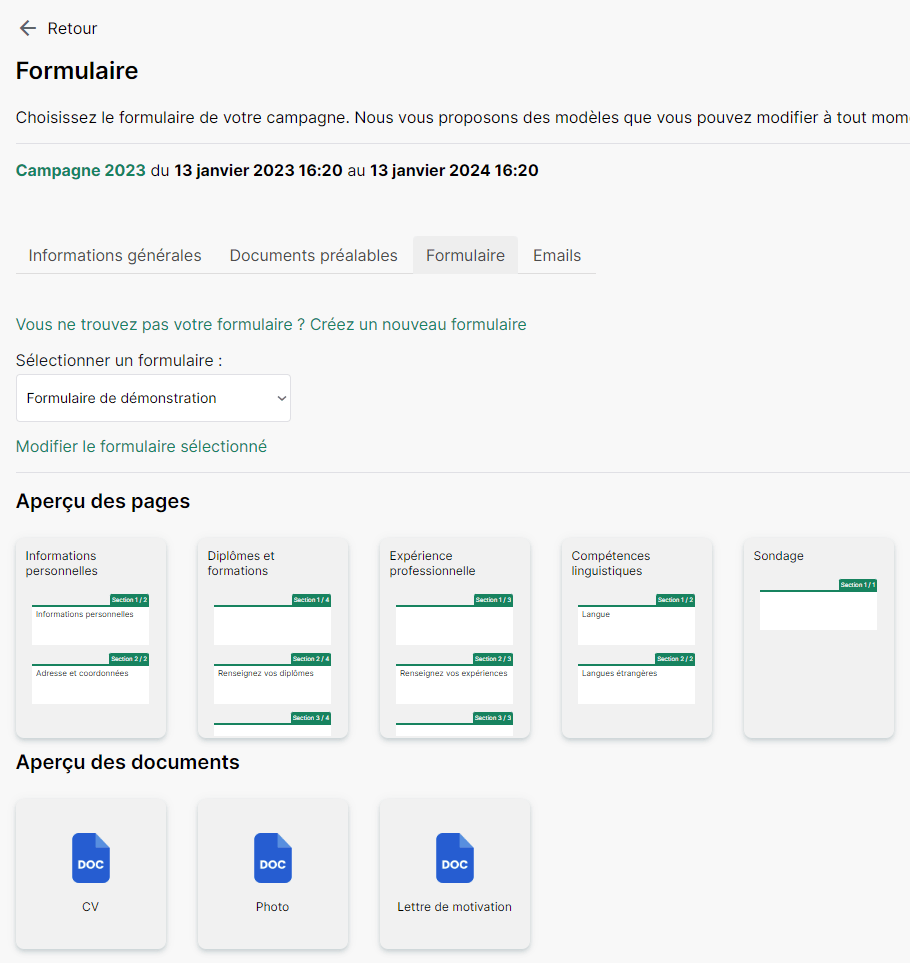
To attract the best students, it's essential to offer them a smooth and personalized application process. This involves implementing intuitive online application forms that adapt to the applicant's profile and desired program. By collecting only key information, such as diplomas, grades, and experience, the process is simplified for the candidate.

These contextualized forms guide students step-by-step through their application. Data entry assistance, consistency checks, and clear instructions at each stage reassure applicants and minimize errors or omissions. The goal is to go paperless eliminating the need to send cumbersome paper applications.

Let's take the example of a student wishing to apply for a Master's degree in Management. The online form will ask them to provide their Bachelor's degree, transcripts from all three years, and any internship or work-study experience. Drop-down menus and pre-filled fields speed up data entry. If there are any inconsistencies, an alert message will appear to help them correct them. They can easily attach the required supporting documents in digital format.

Real-time tracking of application progress

Beyond simply facilitating the application process itself, it's also essential to keep students informed of their application's progress in real time. Implementing automatic notifications at each key stage, such as application receipt, eligibility confirmation, or selection interviews, reassures applicants and maintains their commitment.

A personalized candidate portal allows students to check the status of their application, upcoming deadlines, and required documents or additional information at any time. This proactive follow-up enhances the student's application and strengthens the perceived quality of the institution. The candidate experience becomes a differentiating factor in a context of intense competition between programs.

For example, Sciences Po Paris has deployed and configured an admissions platform for its Summer Schools. Applicants are informed in real time about the completeness of their application, any missing documents, and deadlines. Email and SMS notifications remind them of the next steps. They can interact directly with the team via an integrated messaging system to ask questions.

To streamline the application process for student applicants, here are some best practices to implement:

  1. Submit a 100% online application, on all devices (mobile, tablet, PC)

  2. Pre-fill the fields with data already known to simplify data entry

  3. Display a progress bar and save the information at each step

  4. Integrate a chatbot to answer frequently asked questions 24/7

  5. Provide real-time visibility on the application status

  6. Notify the candidate by email and/or SMS of each step in the application process

  7. Go Paperless provides supporting documents with predefined formats, sizes, and qualities

  8. Allow the file to be modified or supplemented as long as the deadline has not passed

2. Automate administrative tasks to increase efficiency

Multichannel publication of training offers

Recruitment software allows you to centralize the creation and distribution of training offers on a variety of channels: the institution's website, specialized job boards, social networks... Pre-configured ad templates by type of course accelerate publication and ensure consistency of messages.

This automated, multi-channel distribution significantly increases program visibility and attracts a larger number of candidates who meet the prerequisites. The institution thus covers a broad spectrum of qualified student pools, both in France and internationally, and optimizes its recruitment efforts.

Mines-Telecom, for example, deployed and configured an application management platform to attract apprentices. Thanks to pre-scheduled posting campaigns on a selection of relevant job boards and social networks, the school gains visibility among target profiles. The job offers are automatically removed once the deadline has passed.

Automated sorting of applications according to predefined criteria

Faced with a flood of applications, sometimes several hundred for certain programs, manual sorting quickly becomes time-consuming and prone to errors for admissions teams. Recruitment software allows them to define pre-selection criteria (degree, GPA, key skills, etc.) to automatically filter profiles and identify the most suitable candidates.

This automated scoring system saves teams valuable time by eliminating ineligible applications as soon as they are submitted. This allows them to focus on the in-depth evaluation of qualified candidates. This objective pre-selection stage also reduces the risk of overlooking promising candidates lost in the sheer volume of applications.

Let's consider the case of a top business school that receives over 500 applications for its Master in Management program. Using pre-defined scoring criteria in the Applicant Tracking System (ATS) (level of education, GPA, English test score, extracurricular activities, etc.), the software assigns a score to each application. Only candidates who meet the defined threshold are selected for further review.

Here is an overview of useful features to optimize the selection of applications:

Functionality

Profit

Multivariate sorting criteria

Refine the scoring system according to the course prerequisites

Weighting of criteria

Prioritize the most discriminating elements

Semantic matching of experiences

Identify relevant skills and soft skills

Integration of test results

Assess the technical or linguistic prerequisites

Overview of the best profiles

Quickly access the most qualified files

Mobile access

Pre-select candidates in real time

3- Collaborate effectively to expedite the processing of applications

Processing an application often involves several stakeholders: academic advisors, admissions panels, administrative services, etc. Software centralizes all the data and documents in the application, accessible at any time by authorized personnel. No more lost Excel files or paper documents!

Thanks to this unified and secure access, everyone can view information, complete their assessments, and share their comments, all in complete confidentiality. The 360° view of the candidate's journey facilitates communication between stakeholders and accelerates collaborative decision-making. No more time-consuming meetings are needed to decide on a case.

Excelia, for example, has deployed and configured a platform for managing international applications. Administrative teams, program managers, and selection committees have access to a shared and secure space. They can review documents, add comments, assign scores, and communicate via a dedicated messaging system. This allows for a faster and more streamlined admissions process.

Collaborative workflows and team notifications

In addition to centralizing data, recruitment software allows for the definition of workflows tailored to the specific requirements of undergraduate and graduate admissions. Each step, from application receipt to the final admission decision, is orchestrated to streamline collaboration between stakeholders.

Notifications alert each relevant person when a task is assigned to them, along with a priority level and deadline. This unified application tracking prevents oversights or bottlenecks and empowers teams to meet processing deadlines. With a comprehensive view of ongoing admissions, managers can identify potential bottlenecks and reallocate resources as needed.

Imagine a university managing hundreds of applications simultaneously. Thanks to workflows configured in the Applicant Tracking System (ATS), as soon as an application is submitted, a task is created and assigned to the admissions office for an initial eligibility review within 48 hours. Once validated, the application is automatically forwarded to the relevant academic advisors for evaluation. Each advisor receives a reminder notification if they haven't completed the task on time. The applicant is kept informed at each stage.

To strengthen collaboration around admissions, an application management tool must include features such as:

  • Customized spaces for each user profile (administration, teaching, jury, etc.)

  • A unified view of overall progress and progress by candidate

  • Secure access to data, with customizable rights

  • An integrated messaging system for exchanging information on files

  • Customizable notifications to alert you to tasks that need to be addressed

  • A powerful search engine to easily find a candidate

  • Visual indicators of processing times at each stage

4- Measure the performance of the admission processes to continuously improve

To effectively manage its admissions strategy, an institution must be able to accurately measure the performance of its actions. Software provides reliable and real-time updated dashboards and key indicators to track the progress of applications at each stage of the process.

Application processing times, conversion rates by recruitment channel, cost per admission... These detailed statistics help identify areas for improvement and focus efforts where the impact will be greatest. Evaluating the return on investment of actions taken becomes easier, enabling better decision-making.

Let's take the example of a business school that runs a targeted social media campaign to promote a new MSc program to international students. Thanks to the dashboard integrated into the Applicant Tracking System (ATS), it can track week by week the number of applications generated by this campaign, the cost per lead, the conversion rate to admissions, and so on. If performance is insufficient, it can react and quickly adjust its approach.

Surveys of candidates to assess their experience

The best way to improve the candidate experience is still to ask the people most concerned for their opinion! Software makes it possible to automate sending satisfaction questionnaires to admitted students, but also to those whose application was rejected.

Gathering and analyzing this feedback is invaluable for tailoring practices to the specific expectations of the target audience. It's also a way to show students that their voices matter and to involve them in a process of continuous improvement. This is a valuable asset for developing an image of an institution that listens and is forward-looking.

Imagine an engineering school with a long and complex application process. By systematically surveying applicants after their admission, the school realizes that many nearly gave up along the way, frustrated by the numerous steps. They suggest simplifying the application process and providing more transparency regarding deadlines. These are concrete ways to revise the process and avoid losing promising candidates!

Here is an overview of the key data to track to measure the performance of your admissions:

Indicator

Interest

Number of applications

Evaluate the overall attractiveness of the establishment

Distribution by channel

Identify the most effective sources

Conversion rate per step

Identify the roadblocks in the process

Average response time

Measuring team responsiveness

Cost per application

Optimizing your recruitment expenses

Admission rate

Analyze the suitability and quality of applications

Candidate satisfaction

Continuously improve the experience

By combining an analytical approach and qualitative feedback, institutions can build a 360° view of their recruitment performance and focus their efforts on the most impactful actions.

Conclusion:

Applicant tracking software like Emundus is becoming an invaluable asset for higher education institutions, enabling them to optimize student attraction, selection, and conversion. By automating time-consuming tasks, streamlining team collaboration, and offering a personalized experience for applicants, it facilitates higher-quality and more efficient recruitment. This is a precious advantage at a time when competition between programs is intensifying and student expectations are evolving towards ever-greater digitalization and responsiveness.

  • Views: 1916

Why is the Emundus-Sciences Po Paris collaboration a model of success for optimizing admissions to Executive Education programs?

The collaboration between Emundus and Sciences Po Paris is an inspiring example of the digital transformation of admissions in higher education. By adopting this innovative platform, Sciences Po Paris offers a seamless application experience for its prospective students while optimizing the work of its admissions teams. Let's explore the keys to this successful partnership.

Summary:

1. A seamless and intuitive candidate experience
2. Powerful tools for efficient selection
3. Faster and more reliable application processing
4. Digital transformation driving excellence

1- A smooth and intuitive candidate experience

Centralization of applications on a single portal

By choosing to collaborate with Emundus, Sciences Po Paris offers its applicants a centralized platform to submit their applications, track their status, and communicate with the institution. This centralization simplifies the process for applicants, who no longer have to juggle different platforms or send documents by mail.

Submitting applications online through a single portal saves considerable time and energy. Candidates can build their application gradually, track their progress, and finalize it when they are ready. This flexibility is particularly appreciated by students who must simultaneously manage the demands of their current academic program.

Let's take the example of a high school student wishing to apply to Sciences Po Paris. Rather than having to gather and send multiple documents by mail, they can simply log into their personal space on Emundus. There, they can find all the required documents, upload them as needed, and complete the various sections of their application whenever they have a free moment. A real relief during exam season!

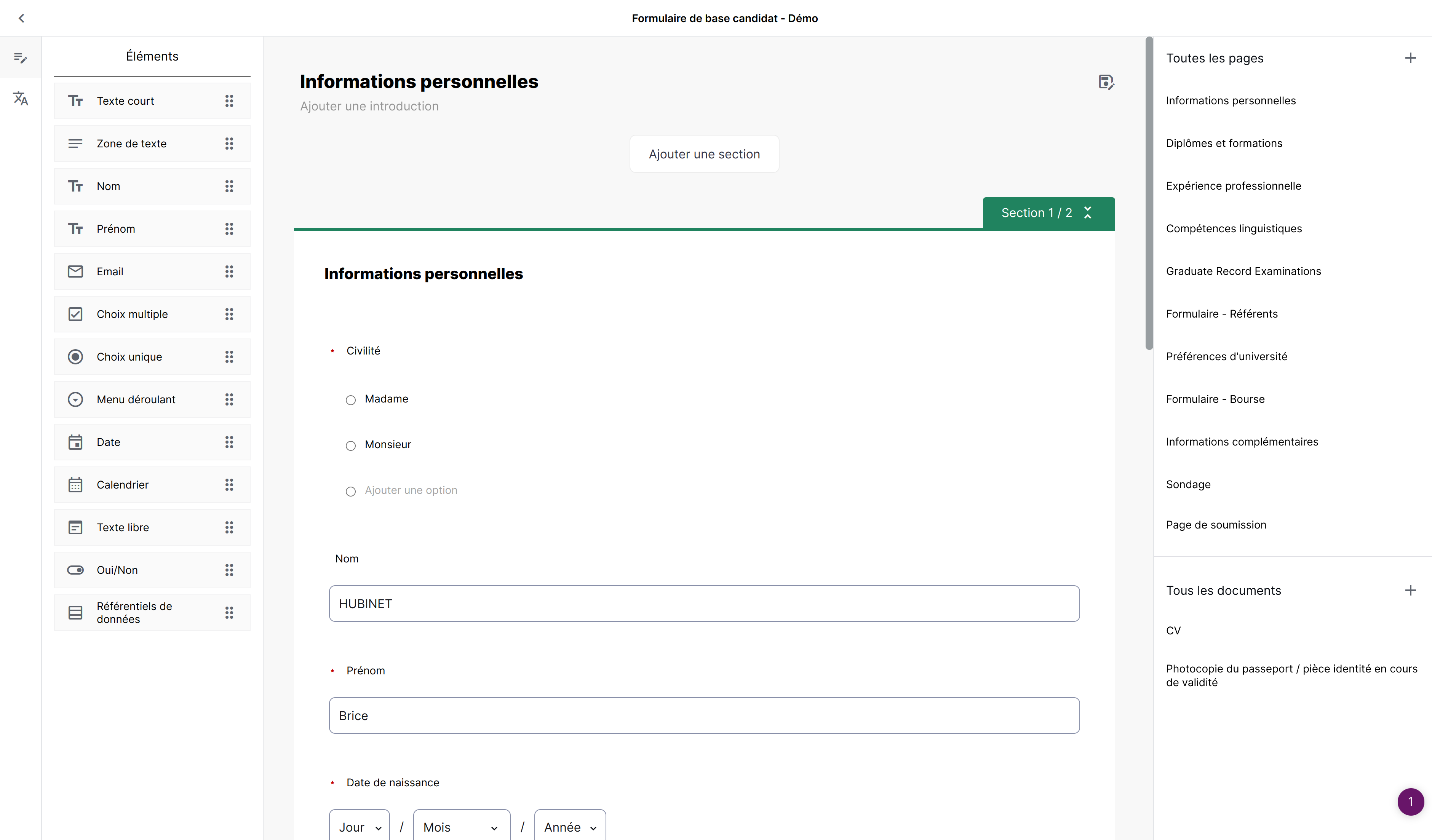
Emundus is an online admissions platform that stands out for its intuitive approach and advanced features.

Easy navigation and easy-to-fill forms

Emundus' user-friendly interface enhances the candidate experience. The platform offers seamless navigation, allowing easy access to different sections of the application. Information is presented clearly, and the steps to follow are explicit, which reassures candidates and reduces their stress.

The application forms have been designed to be intuitive and easy to complete. The fields are clearly defined, contextual help is provided, and data is saved automatically. This allows applicants to focus on the content of their application without being hindered by technical considerations. If needed, online support is available to answer their questions.

Emundus benefits for the candidate

Associated benefits

Intuitive interface

Smooth navigation, reduced stress

Simple forms

Save time, focus on the content of the file

Online support

Quick answers to questions, reassurance

2- Powerful tools for effective selection

Accelerated sorting and evaluation of applications

Thanks to the advanced sorting and evaluation features offered by Emundus, Sciences Po Paris' admissions teams can review and compare applications more quickly and efficiently than before. Multi-criteria filters allow them to rank applications according to predefined priorities and highlight the most promising profiles in just a few clicks.

The jury members have access to a specially designed interface for evaluating applications. They can easily view the various documents in the files, assign scores, and leave comments. Online evaluation facilitates collaboration between evaluators and speeds up the final decision-making process. Gone are the days of painstakingly sifting through paper files one by one!

Imagine an admissions officer processing hundreds of applications for a given program. With Emundus, they can filter applications in just a few clicks based on key criteria such as academic results, extracurricular activities, and motivation. This allows them to quickly identify the strongest candidates. The software then enables them to easily assign these applications to the relevant selection committee members for a thorough and collaborative evaluation.

Modern platforms allow for smoother application management, facilitate communication between candidates and institutions, and improve the overall selection experience.

Decision support through data analysis

Beyond sorting and evaluating individual applications, Emundus provides Sciences Po Paris teams with powerful data analysis tools. Dedicated dashboards allow for a comprehensive view of candidate cohorts, tracking the performance of recruitment campaigns, and identifying significant trends.

These in-depth analyses help guide admissions strategies and enable data-driven decisions. They also allow for the identification of predictive criteria for success, leading to more relevant student selection. Analyzing application data is a valuable asset for optimizing the selection process.

For admissions officers at Sciences Po Paris, having precise statistics on applicant profiles is a valuable decision-making tool. Emundus dashboards, for example, allow them to track the evolution of the number of international applications, identify the most represented countries, and analyze the proportion of scholarship recipients. All this information helps them adjust their recruitment strategy from year to year.

To effectively track key indicators of the admissions process with Emundus:

  1. Identify the key metrics (number of applications, average processing time, acceptance rate, etc.)

  2. Set up custom dashboards on the platform

  3. Analyze this data regularly to identify trends

  4. Use these insights to optimize your strategy from one cycle to the next

3- Faster and more reliable case processing

Centralization and automation of key processes

By adopting Emundus, Sciences Po Paris centralizes application management on a unified platform shared by all stakeholders in the process. No more scattered information across disconnected tools! This centralization ensures better data flow, eliminates duplication, and facilitates team coordination.

Many time-consuming steps in the admissions process are now automated. These include sending acknowledgments of receipt to applicants, verifying the completeness of applications, and notifying applicants of final decisions. This automation saves time for administrative teams, allowing them to focus on higher-value tasks.

At Sciences Po Paris, the deployment of Emundus has centralized all application data on a single platform. Admissions teams, as well as student services and program directors, have access according to their permissions. Everyone can easily find the information they need without having to contact their colleagues. Redundant file and email exchanges have been eliminated in favor of a structured collaborative environment.

Sciences Po Paris, one of the most prestigious social science schools in France, is recognized for its commitment to academic excellence and innovation.

Time savings and increased reliability of intakes

Thanks to the sorting, evaluation, and automation solutions offered by Emundus, Sciences Po Paris was able to reduce application processing time. This freed up valuable time to review more applications, interact with candidates, and refine admission decisions.

Data centralization and process automation also reduce the risk of human error. Files are processed in a more standardized way, and validation steps are systematized, thus limiting oversights or inaccuracies. Ultimately, the admissions process becomes more consistent and reliable, which benefits all stakeholders.

For the Sciences Po Paris teams, the benefits are numerous. The software allows them to acknowledge receipt of applications without delay, automatically send reminders for missing documents, and generate interview invitations in just a few clicks. The tool ensures that each step is completed on time and in accordance with established rules. This provides peace of mind at a time when response times to candidates are being scrutinized more closely than ever!

To process applications error-free through automation:

  1. Map the key steps in the process and identify tasks that can be automated

  2. Configure the business rules and document templates on the platform

  3. Test that the actions are correctly triggered at the corresponding steps

  4. Monitor activity and measure efficiency gains

4- Digital transformation in the service of excellence

Adoption of cutting-edge technological solutions

By choosing Emundus, Sciences Po Paris demonstrates its commitment to the digital transformation of its processes. The institution is adopting a cutting-edge platform that integrates artificial intelligence and predictive analytics technologies. This is a guarantee of modernity and openness to innovation.

Adopting such a solution demonstrates a commitment to providing the best possible experience for both candidates and administrative and academic staff. It embodies the vision of a forward-looking institution that leverages technological advancements to enhance its operations and the quality of its services.

For an institution like Sciences Po Paris, the digital transformation of admissions is essential. In a competitive environment, it's crucial to offer a cutting-edge application process. With Emundus, Sciences Po Paris demonstrates its ability to integrate innovative solutions to enhance its academic reputation—a key strength for attracting top talent.

The collaboration between Emundus and Sciences Po Paris perfectly illustrates how modern admissions platforms are transforming the landscape of higher education.

Constant commitment to innovation and performance

Beyond the implementation of the Emundus solution, the collaboration between Sciences Po Paris and the software publisher illustrates a long-term commitment to innovation and continuous improvement. The two parties interact continuously to develop the platform based on user feedback and emerging needs.

Sciences Po Paris has established itself as a leader in transforming admissions processes. Its experience inspires other institutions in their digitalization and performance improvement projects. Through this successful collaboration, Sciences Po Paris demonstrates that academic excellence goes hand in hand with technological innovation and the optimization of administrative processes.

By working closely with the Emundus team, Sciences Po Paris actively participates in the design of future software developments. The institution shares its needs, relays user requests, and suggests optimizations. This ongoing involvement allows it to benefit from increasingly tailored features. Far from a traditional client-supplier relationship, this is a long-term partnership.

Areas of collaboration

Goals

User needs feedback

Continuously evolve the software

Testing the new features

Ensuring the relevance of the changes

Sharing best practices

Inspiring the higher education sector

In conclusion, the collaboration between Emundus and Sciences Po Paris is a model of its kind in the field of optimizing admissions to Executive Education programs. By combining a cutting-edge technological platform and a long-term partnership approach, the two entities have revolutionized the applicant experience and admissions management. This inspiring alliance paves the way for new, more streamlined, collaborative, and data-driven ways of recruiting students. A benchmark for all higher education institutions.

  • Views: 2461

Erasmus Mundus Masters

Our platform meets your expectations for collecting and processing student files from around the world.

Try it now

Photograph of students in a lecture hall Screenshot of the campaign list page Screenshot of the form creation page Screenshot of the campaign editing page Screenshot of the list of created forms page
  • Become faster and more efficient

    Managing numerous tasks directly on our platform will save you time. With EMUNDUS, you can collect, process, and communicate with candidates, export documents, and much more.

  • Teamwork with a collaborative workspace

    Our solution was designed to enable teamwork directly on your platform. Setting up each user's permissions is very simple.

  • To be visible to all students

    Creating a dedicated webpage for the master's program ensures optimal visibility. The application form is also easily accessible for a better user experience.

They already trust us

  • University of Bordeaux logo
  • University of Tours logo
  • University of Lille logo
  • ESA logo
  • European Commission logo
  • Logo Master CNE
  • euroPHOTONICS logo
  • euroPubhealth logo

Use cases

Discover the other features of our platform

  • Evaluation and Decision

    Carry out your assessments more efficiently and all the tasks that accompany the assessment.

  • Status management

    The processing of candidate files will be able to be effective thanks to their status being organized into a workflow.

  • User rights management

    The role will determine access to spaces, any available features, and access to folders.


Start today!

Read more...Erasmus Mundus Masters

  • Views: 5319

Recruitment of temporary teaching and research assistants (ATERs)

Our platform allows you to recruit teachers according to your selection criteria.

Try it now

Photograph of students in a lecture hall Screenshot of the campaign list page Screenshot of the form creation page Screenshot of the campaign editing page Screenshot of the list of created forms page

Make it easy for teachers who want to prepare a thesis to apply. Process their applications simply with our platform, which offers a wide range of features.

  • Be faster

    Our platform will allow you to be more efficient at every stage of your recruitment process. Save valuable time with a practical tool!

  • Gain visibility

    Make your ATER recruitment visible by using an easily accessible application form. The user experience will be improved for your candidates.

  • Automate tasks

    Thanks to the automation of many tasks, our platform will make it possible to dedicate more time and energy to more essential missions.

They already trust us

  • French Institute logo
  • European Commission logo
  • French Institute logo
  • Sorbonne University logo
  • ESFAM logo
  • CFJ logo
  • Maif logo
  • ADAGP logo

Use cases

Discover the other features of our platform

  • Evaluation and Decision

    Carry out your assessments more efficiently and all the tasks that accompany the assessment.

  • Status management

    The processing of candidate files will be able to be effective thanks to their status being organized into a workflow.

  • User rights management

    The role will determine access to spaces, any available features, and access to folders.


Start today!

Read more...Recruitment of Teaching and Research Assistants

  • Views: 4853